Calories In vs. Calories Out: Why It’s Not That Simple
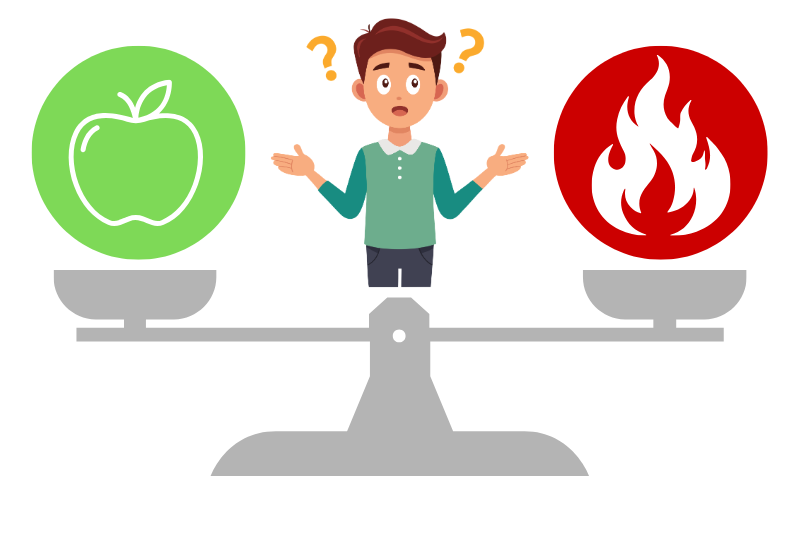
If you’ve spent any time in the health and fitness world, you’ve probably heard this:
“Weight loss is just calories in vs. calories out.”
Eat less. Move more. Problem solved… right?
If only it were that simple.
Because if it were, more people would see long-term success. And we wouldn’t have so many people feeling frustrated, stuck, and blaming themselves when the scale doesn’t budge.
The truth is, while calories do matter, they are only one small piece of a much bigger picture.
The Problem with “Calories In vs. Calories Out”
At its core, the idea makes sense:
If you consume more energy than you burn, you store it.
If you burn more than you consume, you lose weight.
But here’s what that model leaves out:
👉 Your body is not a calculator.
👉 It’s a complex, adaptive, hormone-driven system.
It doesn’t just passively burn calories — it responds to what you eat, how you live, and how stressed or rested you are.
Not All Calories Act the Same
100 calories of soda and 100 calories of steak are not the same inside your body.
Why?
Because food isn’t just energy — it’s information.
Different foods trigger different responses:
Insulin (your fat storage hormone)
Hunger hormones like ghrelin
Satiety signals like leptin
Blood sugar levels
Highly processed, high-carb foods tend to spike blood sugar and insulin, leading to crashes, cravings, and more hunger.
Protein and fat, on the other hand, are more satiating and help stabilize energy.
So even if calories are equal on paper, your body responds very differently.
Hormones Drive Fat Loss (or Fat Storage)
If calories were the only factor, weight loss would be easy.
But hormones — especially insulin — play a major role in whether your body burns fat or stores it.
When insulin is high (often due to frequent carb intake or insulin resistance), your body is more likely to store fat and less likely to access stored fat for energy.
Lowering insulin through nutrition (like a low-carb or keto approach) can help your body shift into fat-burning mode.
Your Metabolism Adapts
Here’s something most people aren’t told:
When you cut calories too low, your body adapts.
It may:
Slow your metabolism
Reduce energy output
Increase hunger signals
Hold onto fat more tightly
This is why extreme calorie restriction often backfires. You might lose weight initially, but over time it becomes harder and harder to sustain.
Your body is trying to protect you — not sabotage you.
It’s Not Just Food
Calories in vs. calories out also ignores other key factors:
Sleep: Poor sleep increases hunger and cravings
Stress: Elevated cortisol can promote fat storage
Movement: NEAT (daily movement) matters more than you think
Hormonal health: Thyroid, insulin, and sex hormones all play a role
All of these influence how your body uses and stores energy.
A Better Way to Think About It
Instead of obsessing over calories, focus on creating an environment where your body wants to let go of excess weight.
That looks like:
Prioritizing protein
Eating nourishing, whole foods
Supporting stable blood sugar
Getting quality sleep
Moving your body regularly
Managing stress
When these pieces are in place, appetite naturally regulates, energy improves, and weight loss becomes a side effect — not a constant struggle.
The Bottom Line
Calories matter… but they’re not the whole story.
Your body is not a math equation.
It’s a dynamic, intelligent system that responds to how you fuel and care for it.
So if you’ve been stuck in the cycle of eating less, trying harder, and feeling like it’s not working — it’s not because you’re failing.
It’s because the advice you’ve been given is incomplete.
Real health isn’t about eating less.
It’s about supporting your body so it can work better.